
A phased plan for
Caldwell Creek ponds.
Restoring pond depth and opening flow paths begins with a clear plan for excavation, access, and sediment handling.
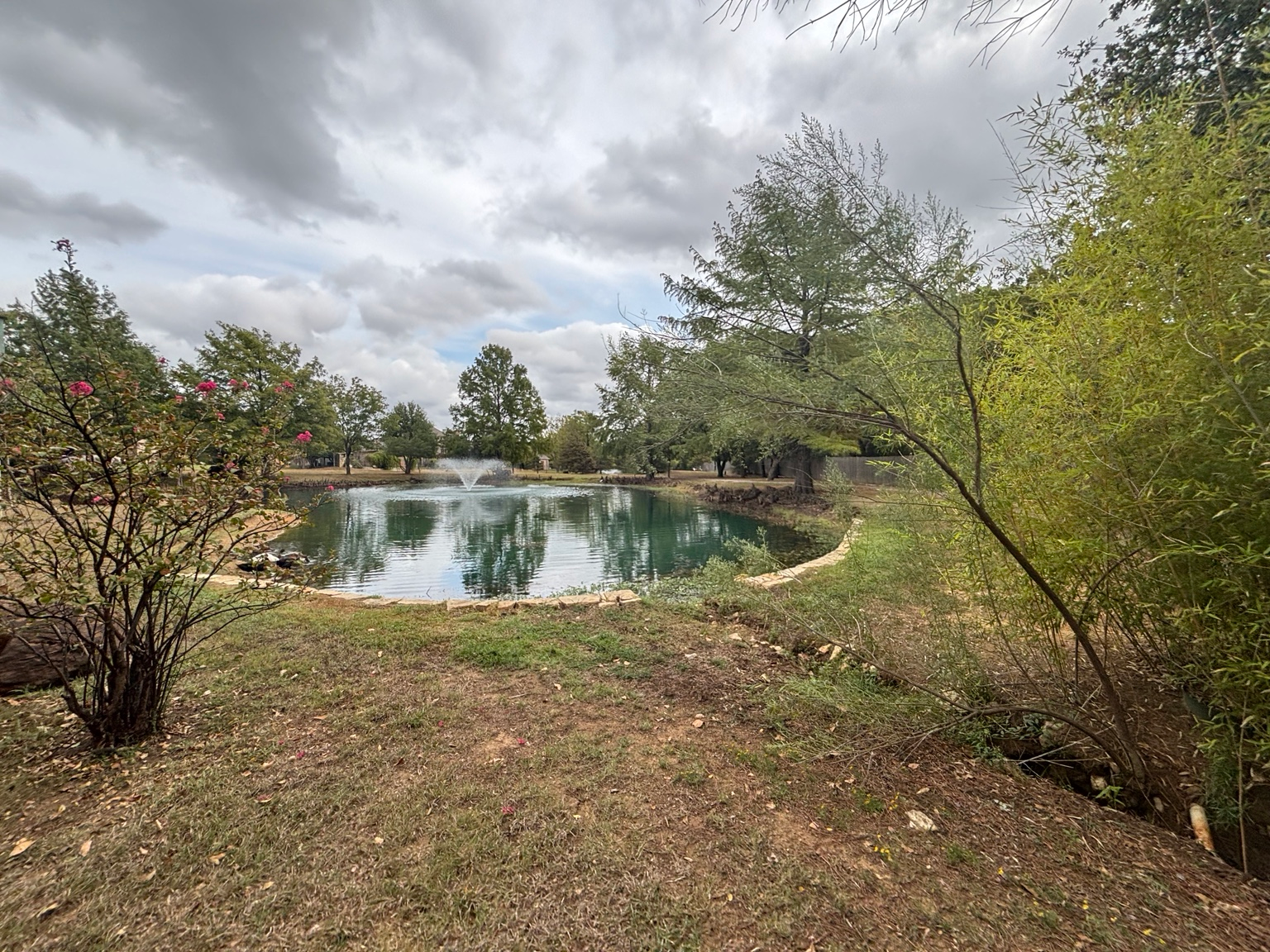
Pond improvement begins with understanding the entire site: where water enters and exits, how equipment can reach the banks, and where excavated material can go.
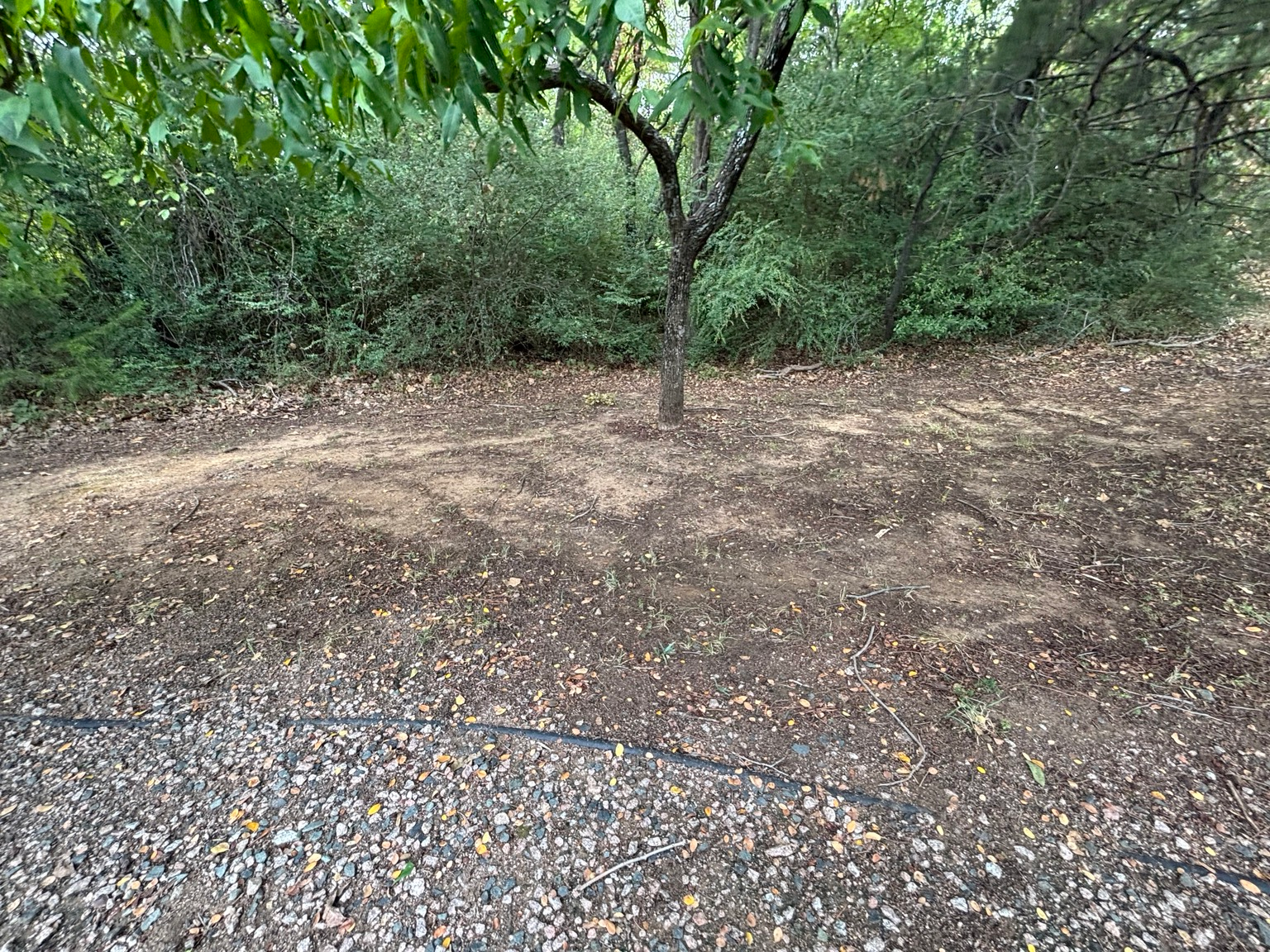
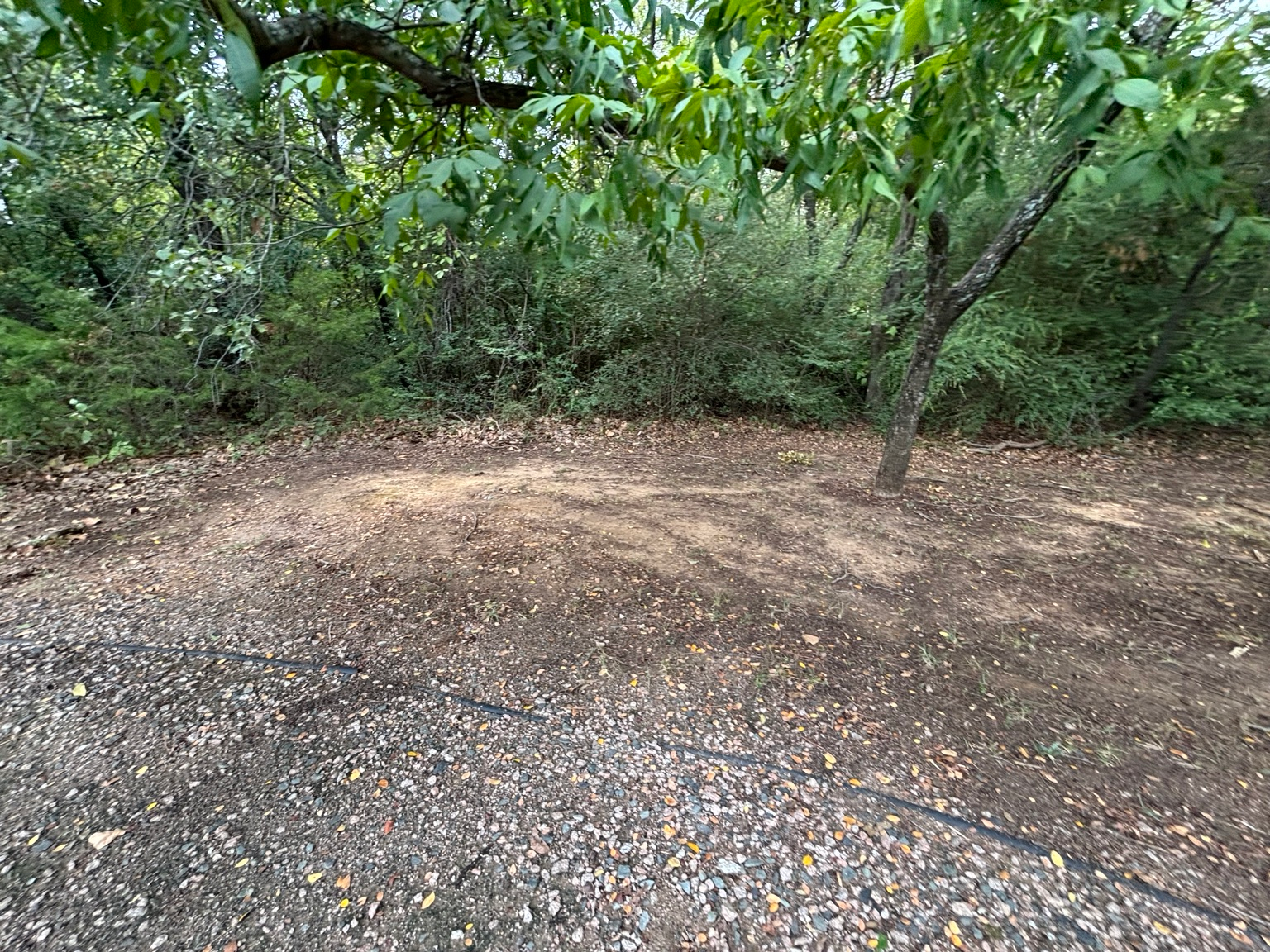
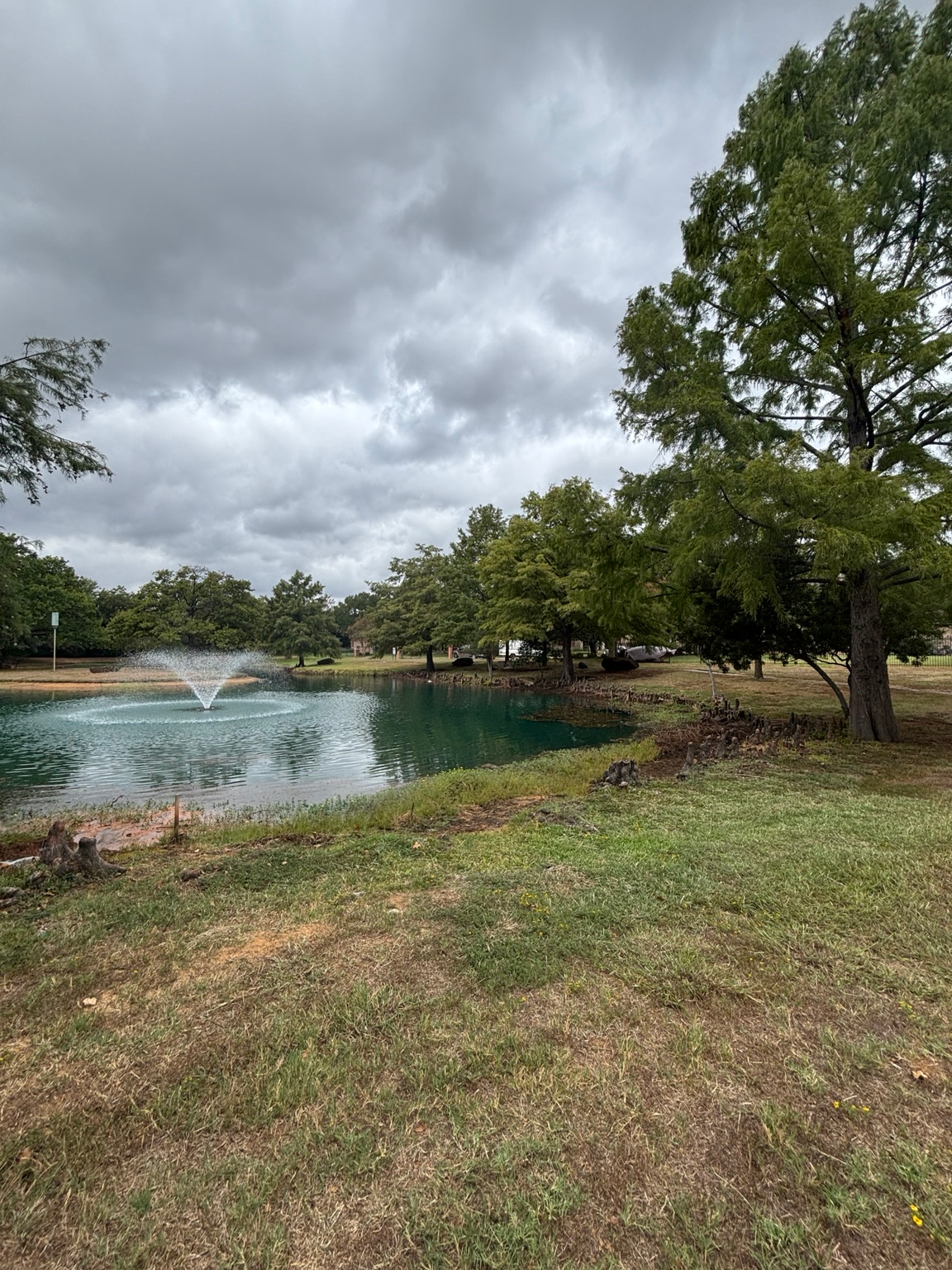
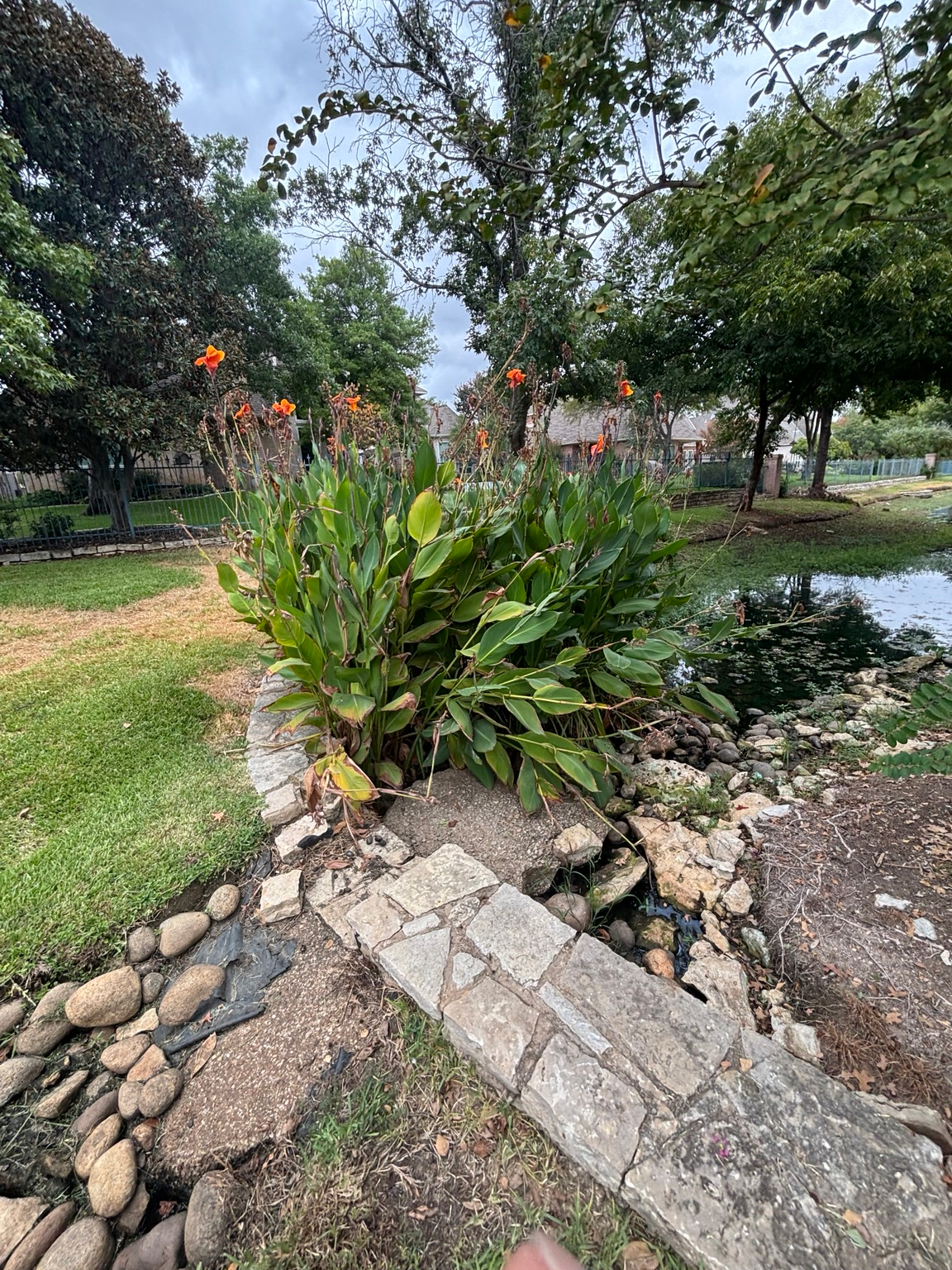
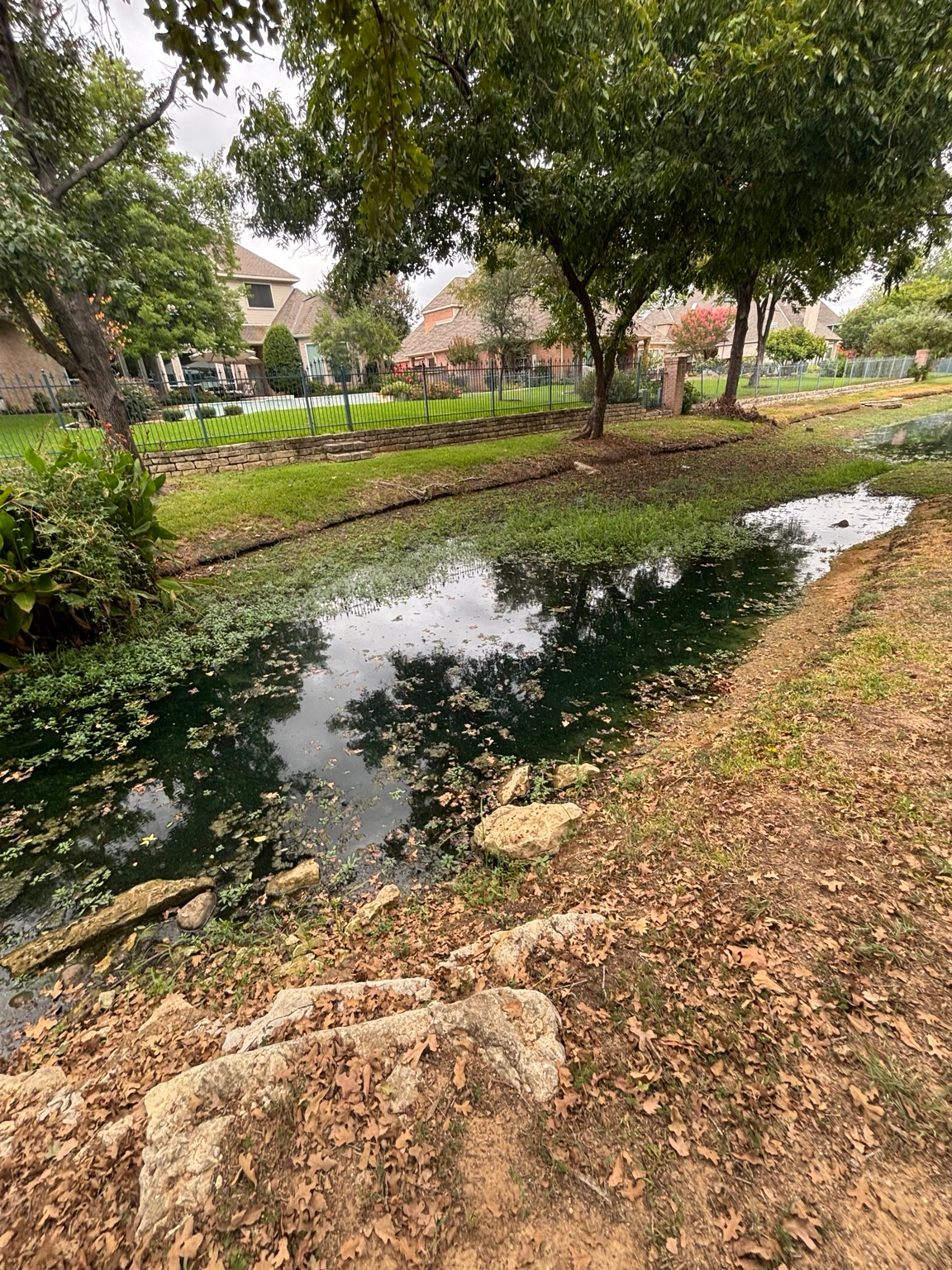
During a recent site visit at Caldwell Creek HOA, we examined a connected pond and creek corridor extending approximately one-half mile. The proposed approach is to begin with two ponds, evaluate progress during an initial five-day work phase, and use those results to plan the remaining work.
The goal is to restore depth within the selected ponds and improve water movement through the connected system.
Starting with two ponds
The proposed first phase focuses on two ponds near adjacent homes. This starting area gives the crew an opportunity to evaluate sediment conditions, equipment reach, and the time required to excavate and relocate material.
It also helps determine whether work can remain within the HOA’s common areas or whether additional access arrangements will be necessary. The initial plan allows five workdays, Monday through Friday. The amount completed will depend on actual sediment quantities, ground conditions, and hauling efficiency.
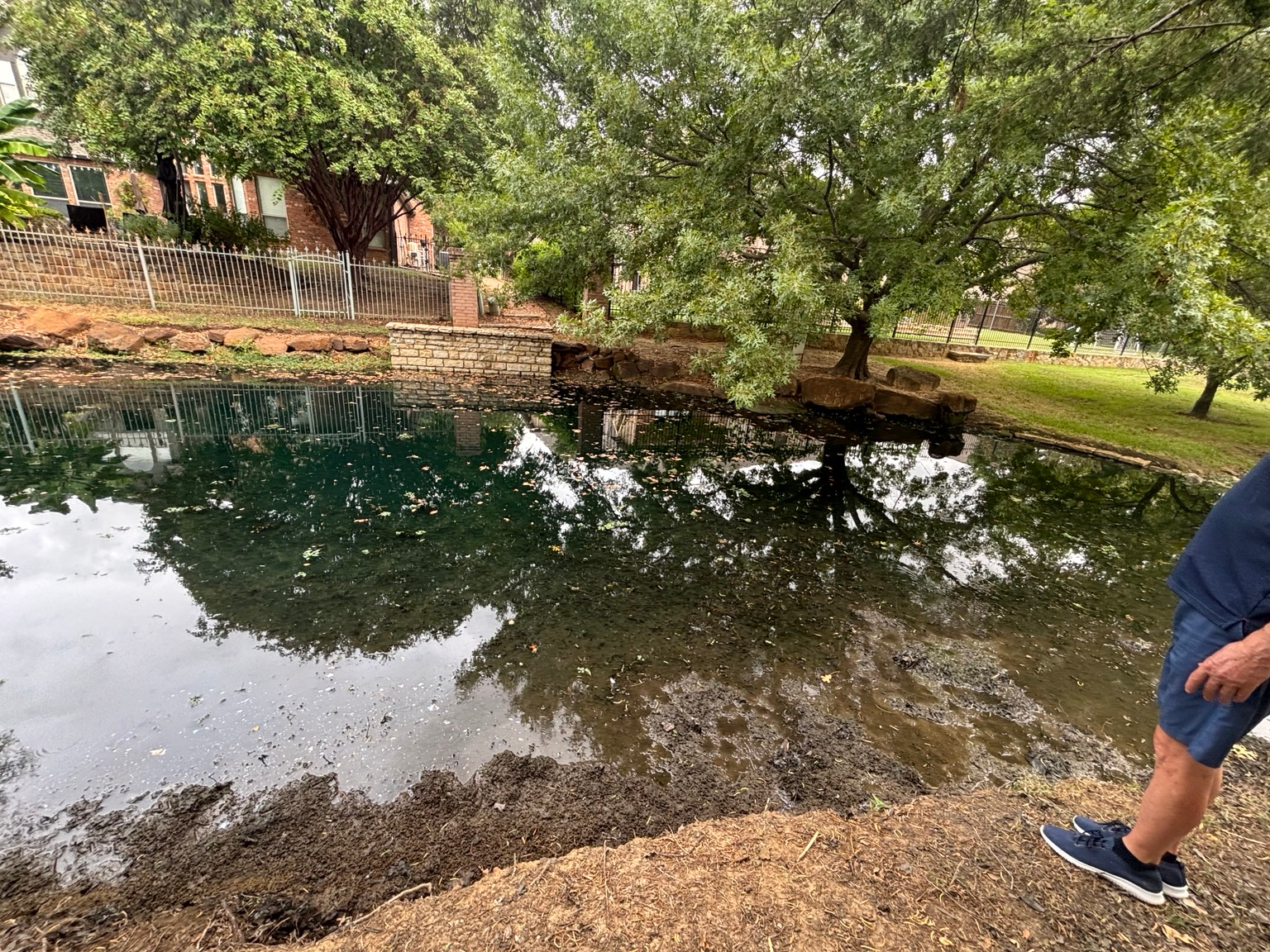
Targeting four feet of water depth at the center
The proposed excavation target is approximately four feet of finished water depth at the center of each pond, with the bottom gradually tapering upward toward the sides.
That depth is measured from the agreed intended water level to the finished pond bottom. It does not mean removing four feet of material everywhere. Before excavation, the crew will need to confirm existing depths, sediment thickness, and the intended pond shape.
Final slopes and excavation limits will account for pond dimensions, soil conditions, and existing shoreline features.
Focusing excavation on the ponds
The primary work will take place within the pond formations. The plan does not call for continuous trenching along the entire creek corridor.
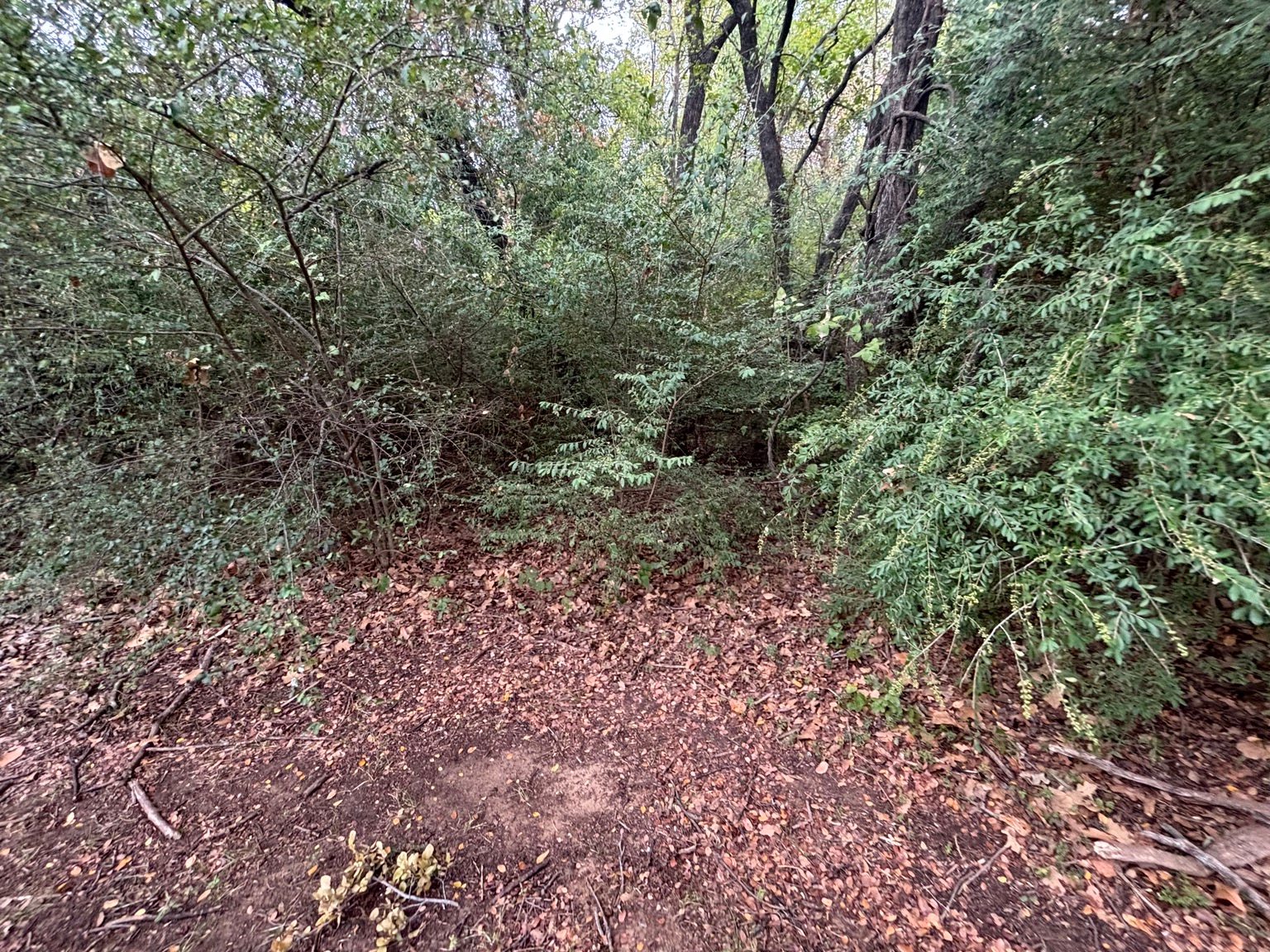
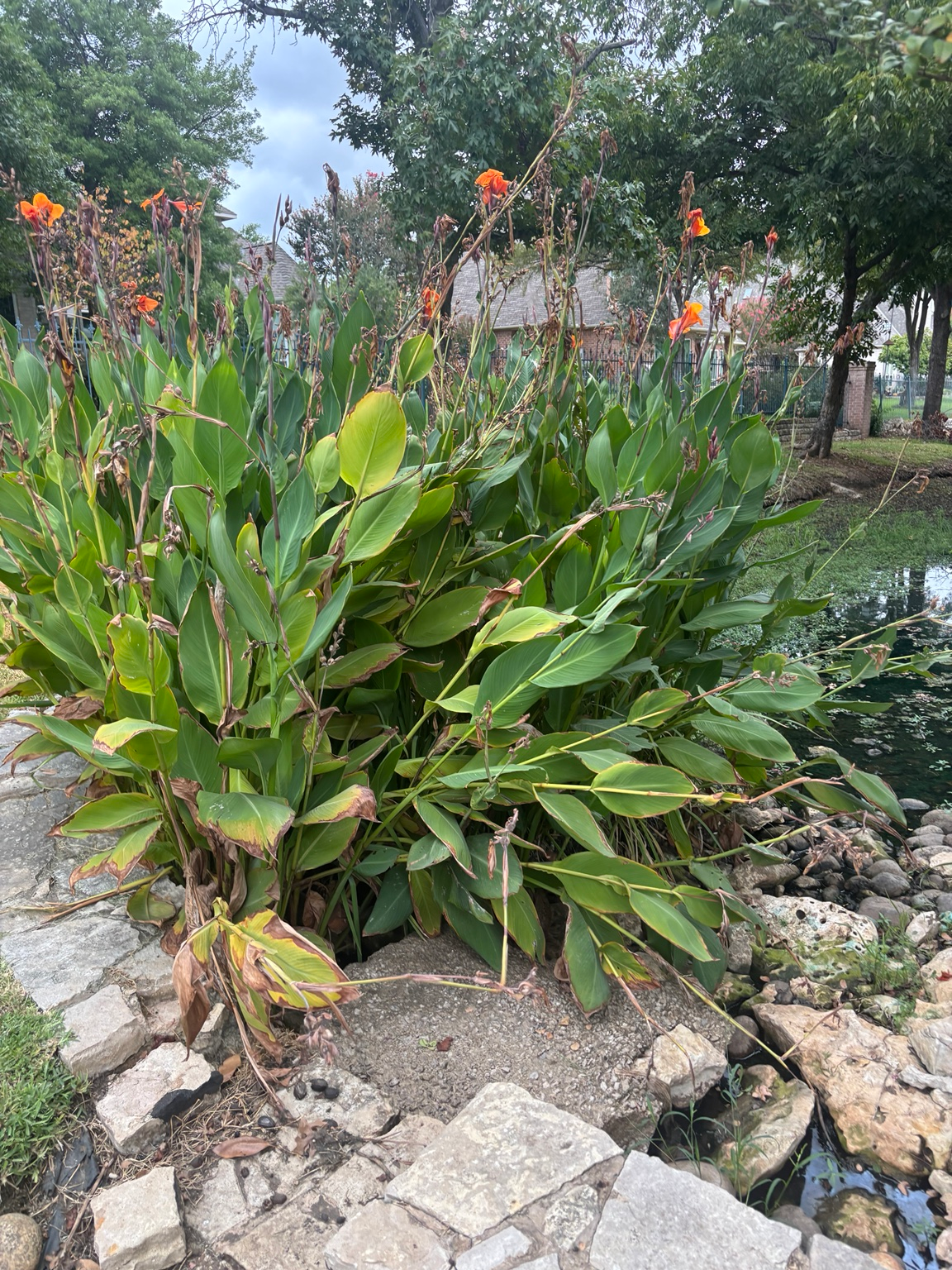
Limited clearing or excavation may be needed at pond outlets and adjoining ditch connections to support water movement. Selected tall vegetation may also be removed where it obstructs the agreed work area or access. Existing trees and stone edging are features to protect.
Planning equipment access through the common areas
The site visit identified an access point at the bottom end of the corridor that appears wide enough for a truck to enter. From there, the crew will determine practical routes through the site.
The intended approach is to work within community-owned common areas wherever possible, with boundaries and access permissions confirmed before work begins. Routes will be checked for clearance, turning room, and ground firmness. Some sections may require work from opposite banks because an excavator cannot reach the entire pond from one position.
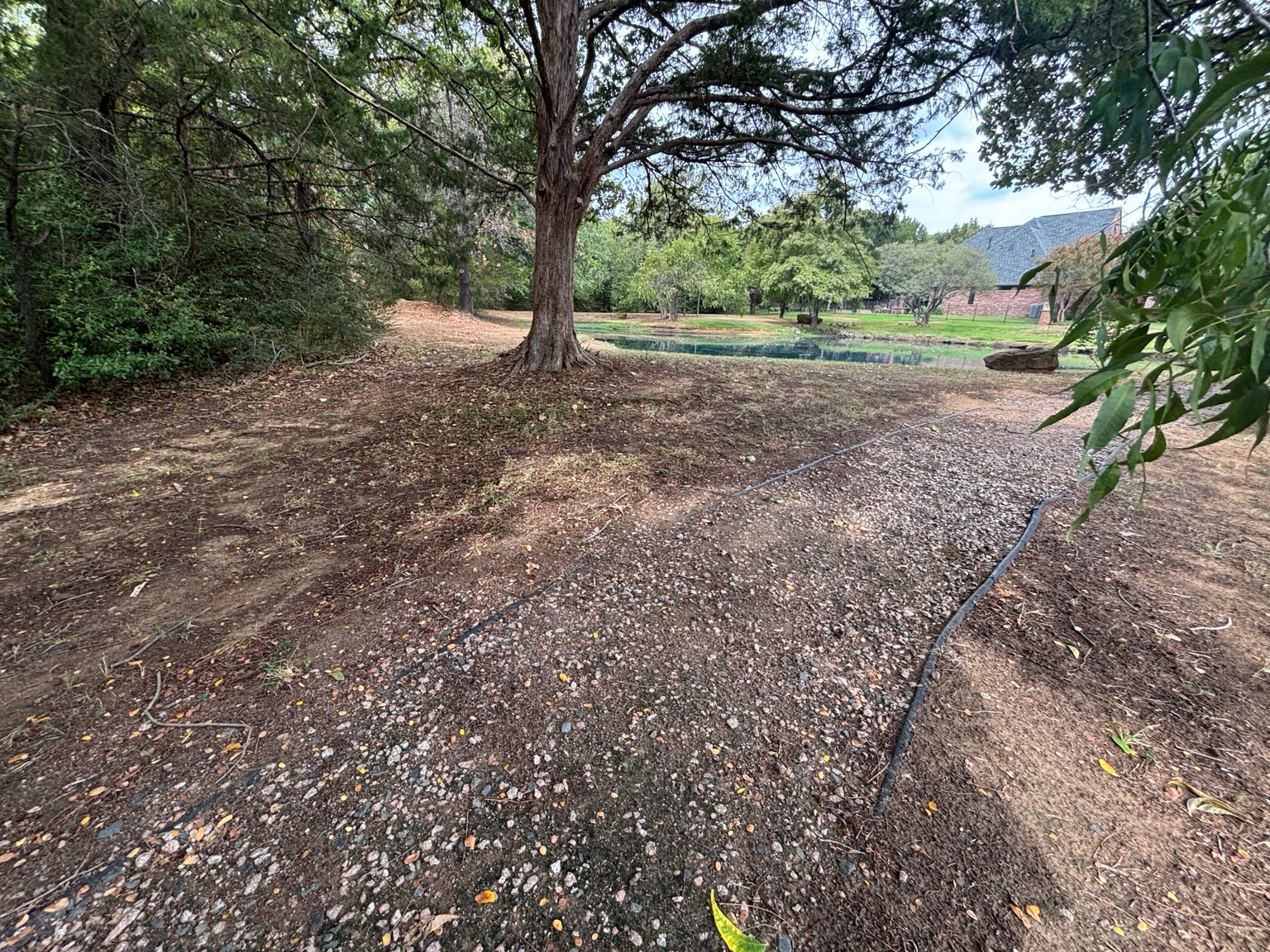
Moving the material is part of the plan
The anticipated setup includes a large excavator, a skid steer or compact track loader, and a narrow hauling vehicle to transport excavated material to an agreed placement area.
The excavator would remove sediment and either load the carrier directly or stage it for handling. The hauling vehicle would move material along the available route, while the loader helps manage staged material and the placement area.
A second excavator may be considered if it solves a reach or material-handling problem. Final equipment selection will follow confirmation of access dimensions, bank conditions, and hauling distance.
The placement area must be agreed upon before digging begins. The work plan also needs to account for wet sediment, temporary staging, and how relocated material will be managed.
Using Phase One to plan the next step
At the end of the initial phase, Iron Earth would review the completed areas, remaining excavation, and performance of the access and hauling plan with the HOA.
- How much material was removed during the work period?
- Was access through the common areas sufficient?
- Did the equipment provide the necessary reach?
- How much work remains to achieve the intended pond shape?
- What should be included in the next phase?
Completion of both ponds within five days has not yet been established. The first phase is intended to make measurable progress while providing the information needed to plan subsequent work.
A clear starting point for pond improvement
For Caldwell Creek, the proposed starting point is two ponds, a four-foot center-depth target, tapered sides, and an initial five-day work phase.
Before work begins, excavation limits, material placement, property boundaries, and applicable project approvals will be confirmed. This approach gives the HOA a defined scope and a practical way to evaluate progress before extending work through the rest of the corridor.
Photos from the site visit
Tell us about your project.
Send the property address, photos, and a description of your pond excavation or drainage project.